Showing posts with label water treatment equipment. Show all posts

Sunday, 19 June 2016

How to use Water Treatment Equipments for RO Water Fileration in Industry?

Water Treatment Equipments for Water Filtration :

Filtration equipments are used to remove contaminates or separate a mixture of different elements. There are different types of filtration equipments available such as the sedimentation equipment, gravity filtration, pressure filtration, Vacuum filtration, etc.

Water Treatment Equipments for RO Water Fileration
Types of Water Treatment Equipments :

1. Sedimentation Equipment:

It uses a gravitational or chemical process to make particles to settle down at the bottom at sediments.

2. Gravity Filtration Equipment: 

It makes use of the hydrostatic pressure of a pre-filter column to generate the flow of the filtrate.

3. Vacuum Filtration: 

Vacuum filtration is a part of liquid-solid separation equipment. Vacuum filtration are available in batch and continuous operating cycles. Continuous Vacuum filters are often used in Water processing industry.

Focus Engineerrs are specialized in RO Water and bottled water projects and the equipments are tailor made. In addition to the above Focus product range meet the industries expanding requirement for treated water of varying purity level for a wide range of applications. Chemical Dosing System

Focus Engineerr's  water treatment equipments system are available from standard package type to custom built installations for high purity water.

Water Treatment Equipments Plant Process

Water Treatment Equipments Plant :

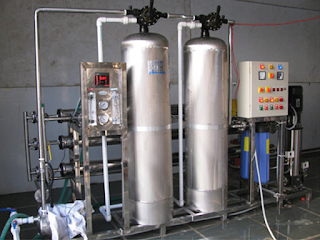
Conventional water treatment concepts blended with Modern technology is offered by Canadian Crystalline in their pressure sand filter, activated carbon filter, de-mineralizers, softener, iron removal filter, fluoride removal of plants, ozonators, ultra violet sterilizers, ultra filtration, micro filters, nano filtration, electro deionization, reverse osmosis system and so on.

Focus Engineerrs advanced research and development wing has developed systems for various applications in prime industries like off shore oil rigs, fertilizers, hospitals & refineries, etc.
It's also provides domestic & international dosing pump manufacturer in india & other country.

Tuesday, 14 June 2016

How do water treatment equipment plants work?

How to Water Treatment Equipments Plants Works:

Water treatment equipments or purification and sanitation of water-varies as to the source and kinds of water. Municipal waters, for example, consist of surface water and ground water, and their treatment is to be distinguished from that of industrial water supplies. Municipal water supplies are treated by public or private water utilities to make the water potable (safe to drink) and palatable (aesthetically pleasing) and to insure an adequate supply of water to meet the needs of the community at a reasonable cost. Except in exceedingly rare instances, the entire supply is treated to drinking water quality for three reasons: it is generally not feasible to supply water of more than one quality; it is difficult to control public access to water not treated to drinking water quality; and a substantial amount of treatment may be required even if the water is not intended for human consumption.

Water Treatment Equipments Plant
Water Treatment Equipment Plants
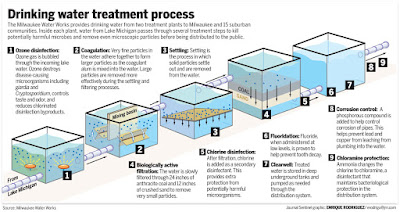
All surface waters have the potential to carry pathogenic (disease-causing) microorganisms and must be disinfected prior to human consumption. Since the adequacy of disinfection cannot be assured in the presence of turbidity, it is first necessary to remove the suspended solids causing the water to be turbid. This is accomplished by a sequence of treatment processes that typically includes coagulation, flocculation, sedimentation, and filtration. Coagulation is accomplished by adding chemical coagulants, usually aluminum or iron salts, to neutralize the negative charge on the surfaces of the particles (suspended solids) present in the water, thereby eliminating the repulsive forces between the particles and enabling them to aggregate. Coagulants are usually dispersed in the water by rapid mixing.

How to use Chemical Dosing Pump System for Water Purification:

Other chemicals may be added at the same time, including powdered activated carbon (to absorb taste- and odor causing chemicals or to remove synthetic chemicals); chemical oxidants such as chlorine, ozone, chlorine dioxide, chemical dosing system or potassium permanganate (to initiate disinfection, to oxidize organic contaminants, to control taste and odor, or to oxidize inorganic contaminants such as iron, manganese, and sulfide); and acid or base (to control pH). Coagulated particles are aggregated into large, rapidly settling "floc" particles by flocculation, accomplished by gently stirring the water using paddles, turbines, or impellers. This process typically takes 20 to 30 minutes. The flocculated water is then gently introduced into a sedimentation basin, where the floc particles are given about two to four hours to settle out. After sedimentation, the water is filtered, most commonly through 24-30 in (61-76 cm) of sand or anthracite having an effective diameter of about 0.02 in (0.5 mm).

Chemical Dosing Pump System Manufacturer India

Dosing & Metering Pump Manufacturer in India:

When the raw water is low in turbidity, coagulated or flocculated water may be taken directly to the filters, bypassing sedimentation; this practice is referred to as direct filtration. Once the water has been filtered, it can be satisfactorily disinfected. Disinfection is the elimination of pathogenic microorganisms from the water. It does not render the water completely sterile but does make it safe to drink from a microbial standpoint. Most water treatment plants in the United States rely primarily on chlorine for disinfection. Some utilities use ozone, chlorine dioxide, chloramines (formed from chlorine and ammonia), or a combination of chemicals added at different points during treatment. There are important advantages and disadvantages associated with each of these chemicals, and the optimum choice for a particular water requires careful study and expert advice.

Thursday, 2 June 2016

Latest RO Water Treatment Equipment Purifiers in Chennai Market

Luminous Livpure launches Latest RO+UV Water Treatment Equipment Purifier System for Home.

New Advanced Luminous Livpure RO Water Purifiers :

RO Water Treatment Equipment System
How it is better than others?

1) Sleek and Slim look.
2) Digital display
3) Easy to service
4) Nano silver Technology
5) Trust of TATA brand.

You can buy online at Water Treatment Equipment Purifier

Focus Engineerrs Other  Services:

1. Chemical Dosing Pump System

2. Metering and Dosing Pump Manufacturer & Suppliers India

Saturday, 28 May 2016

How to Find the Best Water Treatment Equipment System for Pure Water

Water is undoubtedly the purest substance in the world capable of curing a host of illnesses. But because it is pure it can be contaminated very easily. This brings us to the point of a carefully designed water treatment system for your home or business premises. With the best system in place you can clean out harmful impurities with the potential to cause illness, and even death.

Find the Right Water Treatment Equipment System:

You can have two types of treatment systems installed, depending of course on what exactly you need purification for. Let us say you have a well you would like to protect from contamination. In this instance you ought to have a system that incorporates at least two different systems. The first entails having a kinetic degradation fluxion method of water filtration.

Water Treatment Equipments System
Right Water Treatment Equipments System

With this method you remove large sediments that are visible with the naked eye, as well as those that are microscopic. A combined process incorporating a combination f zinc and copper helps to remove dangerous electrons that may be trapped in water. In addition to eliminating these microbiological contaminants are also rendered harmless.

But this purification process is not going to be enough as it does not remove those other impurities that are not removed with the kinetic process mentioned above. Therefore the granular activated carbon filter will do you more good than you can imagine. Using a film of bituminous coal the microscopic impurities are filtered out of you drinking water, thereby eliminating heavy metal contaminants and pesticides.

When it comes to tap water an entirely different purification method is implemented. Without even investing a lot of money in an in-built filtration system you could boil the water before drinking it. Boiling has the benefit of killing bacteria and pathogens that can quit easily form a part of water. This is preferable for particular instances when you store water for drinking in the fridge.

How to Use Chemical Dosing Systems for Pure Water:

So before placing your water in storage bottles just boil it in a kettle before hand. However, boiling water is not really good enough. It is for this reason that you should actually use the distilling method. When you distill water you actually make use of the water vapor that you get when boiling water. So once it has condensed it will be safe for drinking, a lot safer than just boiling it.

Chemical Dosing Systems for RO Water
How to Use Chemical Dosing Systems for RO Water
On top of this you can also use reverse osmosis, a process that involves passing water through a semi-permeable membrane. Such a membrane extracts the microscopic particles in water, but it is not always safe. With time the membrane can deteriorate in quality, resulting in harmful pathogens remaining in water.

Other Water Treatment Purification Systems:

Metering and Dosing Pump Manufacturer India

Tuesday, 3 May 2016

Which is the best water purifier equipment system for home use in india?

Water Treatment Equipments can be classified into the following categories:

1. Industrial wastewater treatment
2. Boiler water treatment
3. Cooling water treatment

Water treatment is used to optimize most water-based industrial processes, such as: heating, cooling, processing, cleaning, and rinsing so that operating costs and risks are reduced. Poor water treatment lets water interact with the surfaces of pipes and vessels which contain it. Steam boilers can scale up or corrode, and these deposits will mean more fuel is needed to heat the same amount of water.
chemical dosing pump system used for waste water treatment in industrial sectors.

Water Treatment Equipments
Water Treatment Equipments System

Types of Water Treatment Purifier Equipments System:

There are four types of water purifiers available in India.

1. Gravity based water purifiers
2. Reverse Osmosis Filters (RO)
3. Ultraviolet Filters  (UV)
4. RO + UV

1. Gravity based water purifiers: 

In these purifiers water is filtered through normal gravity process, from the higher point to a lower point, without the help of any external force.


2. Reverse Osmosis Filters (RO):

RO water purification involves pumping water through a semi-permeable membrane, which filters out  water contaminants.  They are known to remove heavy metals and chemicals like  fluoride, arsenic, nitrates, and lead.  But are not as effective  against bacteria and viruses.

3. Ultraviolet Filters (UV):

UV filters use UV radiation to kill bacteria and viruses. However, they are unable to remove heavy metals or chemicals like arsenic, nitrates and iron.

4. RO + UV:

Combination of RO and UV filters

Chemical Dosing System for Water Treatment

Which type of water purifier to choose for home?

If the source of water is bore well, RO is highly recommended as it may contain fluoride and arsenic.
If the water has bacteria or viruses then UV is suggested.

Tuesday, 22 March 2016

How to Choose Right Water Treatment Equipment Systems for Home

Water Treatment Equipment :

Water treatment is any process that makes water more acceptable for a specific end-use, which may be drinking, industry, irrigation, river flow maintenance, water recreation or many other uses. Water treatment should remove existing water contaminants or so reduce their concentration that their water becomes fit for its desired end-use, which may be safely returning used water to the environment.

Types of Water Treatment Equipment Systems:

In an effort to help you identify your existing water treatment system or to help you choose the new system which will best fit your needs, we have provided information about the following four types of water purification and water filtration systems.

water treatment equipment
Water Treatment Equipment

The following are main types of water treatment equipments are...

1. Distillation
2. Reverse Osmosis(RO Systems)
3. Ultraviolet
4. Filtration

1. Distillation :

Is the process in which a liquid such as water is converted by heating, into a vapor state, and the vapor cooled and condensed to a liquid state and collected. It is the process of removing the liquid (water) from its constituents or contaminants; as compared to other processes where contaminants are removed from the water (liquid). Distilled water is water that has been purified by passing through one or more evaporation –condensation cycles and contains essentially no dissolved solids

2. Reverse Osmosis(RO Systems) :

Is a process for the reduction of dissolved ions (such as salts) from water in which pressure is employed to force liquid (water) through a semi-permeable membrane, which will transmit the water but reject most other dissolved materials. When forced against the membrane surface, the dissolved materials are repelled, while the water molecules are diffused through the membrane molecule by molecule, forming purer water on the other side.

3. Ultraviolet :

Sunlight has long since been known to kill micro-organisms. The rays from the sun contain the UV *spectrum used in Ultraviolet Water Treatment Systems – although at much lower intensities. It is also referred to as either the Germicidal Spectrum or Frequency. The frequency used in killing micro-organisms is 254 nanometers (nm). The UV lamps used are designed specifically to have the highest amount of UV energy at this frequency.

4. Filtration :

A process in which water passes through a water system that may include one or more filters for the purpose of removing turbidity, taste, color, iron or odor. The design can be loose media tank-type systems or cartridge devices. In general the process may include mechanical, adsorptive, neutralizing and catalyst/oxidizing filters.

Water Treatment Equipment System
Water Treatment Equipment Systems


Focus Engineers : 

We are manufacturing supreme quality Waste Treatment Equipment that are integral part of any water treatment plant. These are manufactured from high grade material and are tested on several international parameters before being offered to our clients. 

Our manufacturing team while keeping in close touch with R&D team designs these components, making these durable and cost effective. Water treatment systems are installed in various industries, such as pharmaceutical industry, power plants, chemical industry, textile industry, oil & gas sector and many more.